Old Testament
-

Paul applies YHWH’s self-sworn oath from Isaiah 45 — the oath sworn by the one beside whom there is no other — directly to Jesus in Philippians 2:10-11. This article argues that the choice is not a loose borrowing of Isaianic language but an identification of Jesus within the divine identity of YHWH. Six sections…
-

A Catholic and Eastern Orthodox response to Jimmy Akin’s Divine Council reading of Genesis 1:26 — from Dei Verbum, the Fathers, the Talmud, and the Targums.
-

Was the Trinity hidden in the Old Testament all along? Discover the plural language of Genesis, the Angel of the LORD, Isaiah’s Trisagion, and Psalm 110 — pre-Christian Trinitarian evidence.
-
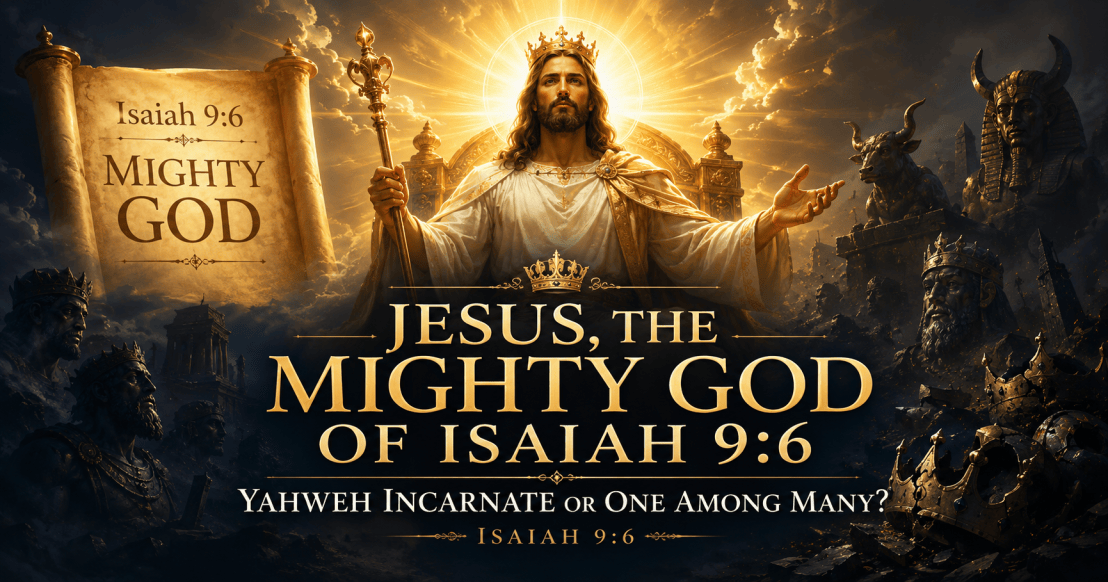
Is Jesus truly Yahweh in the flesh? Explore Isaiah 9:6 and the biblical case for Christ as the Mighty God—more than just a ruler, divine incarnate.
You must be logged in to post a comment.